

Design Notes
The High-Rise Brief
Inspired by maternity needs. Made for everyday comfort, during pregnancy and beyond.
Why We Started
The brief began during my wife's pregnancy.
As her body changed, something as ordinary as underwear became unexpectedly difficult to get right.
She wanted cotton against her skin with enough fabric to properly cover her abdomen and bottom. And she wanted the brief to feel secure without becoming tighter and more noticeable as her pregnancy progressed.
We looked at what was available locally, but kept finding compromises.
Some briefs had the coverage but relied heavily on synthetic fabric. Others used more natural materials but did not have the shape or room she wanted.
So instead of choosing between material and fit, we started developing our own.
That process began with fabric selection and pattern making, moved through repeated prototypes, and eventually became the brief we make today.
My wife wore it through pregnancy. She continued wearing it after giving birth by C-section. Four months postpartum, she still reaches for the same brief.
That changed how we thought about the product.
Pregnancy had revealed the need, but the need itself was much broader: soft underwear, natural fibres, proper coverage and enough room for a body that does not stay exactly the same.
The Fabric: undyed organic cotton
For something worn directly against the skin for hours at a time, we wanted the main body fabric to remain simple.
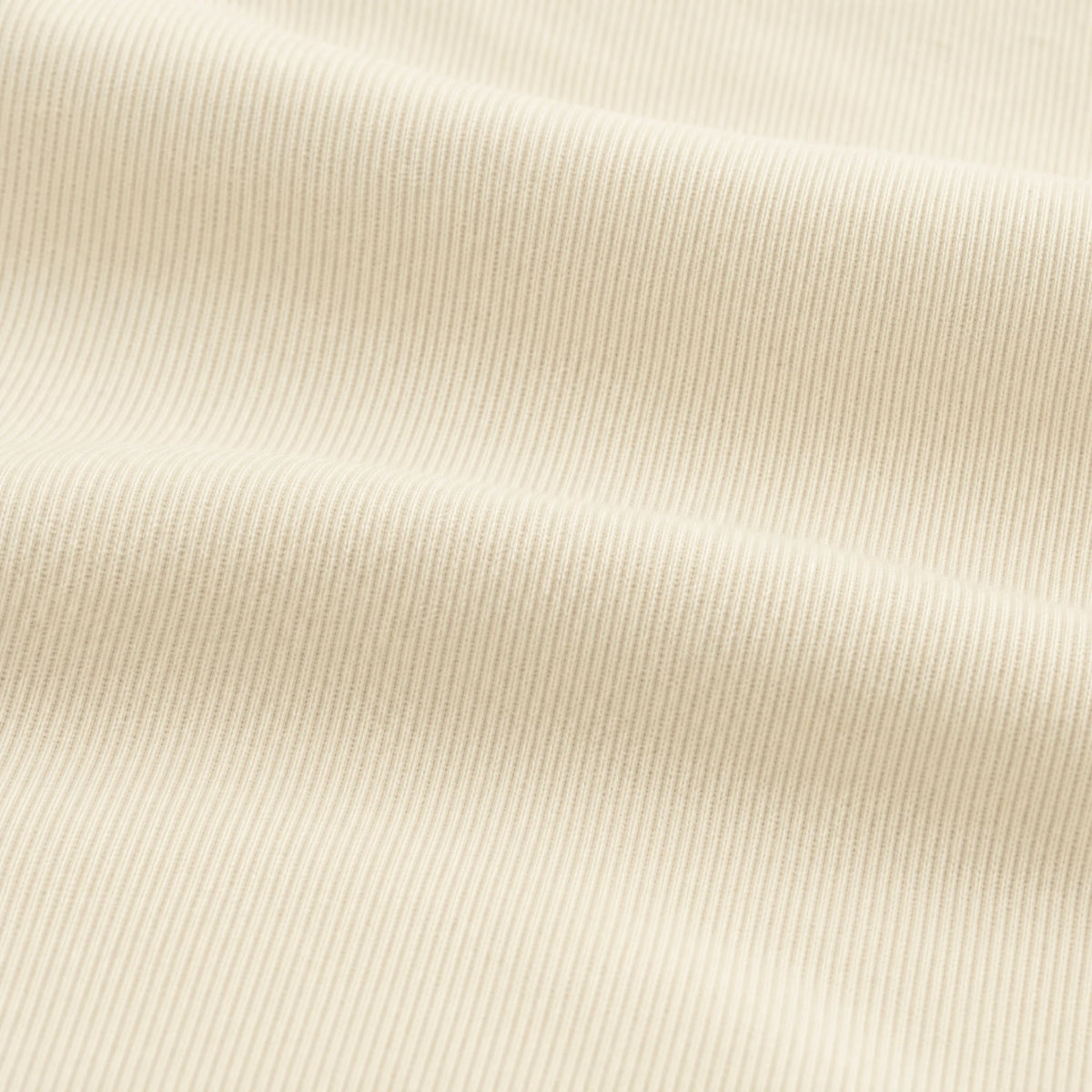
We chose an undyed 100% organic cotton 1×1 rib.
The rib construction gives the cotton natural flexibility without turning the body fabric into a synthetic stretch blend.
It has enough give to move with the body, while keeping the familiar softness and breathability of cotton against the skin.
We also chose to leave the cotton undyed.
Its ecru colour is the cotton's natural appearance rather than a colour added to make the garment look a particular way.
Functional elastic is still used where it is genuinely needed in the waistband and trims. Our aim was never to pretend that a practical pair of underwear can be made without structure.
Instead, we wanted to keep synthetic material away from the main body fabric wherever practical.
All our fabric is supplied by a GOTS-certified manufacturing partner, certified by ECOCERT Greenlife.
The waistband: three prototypes, one balanced solution
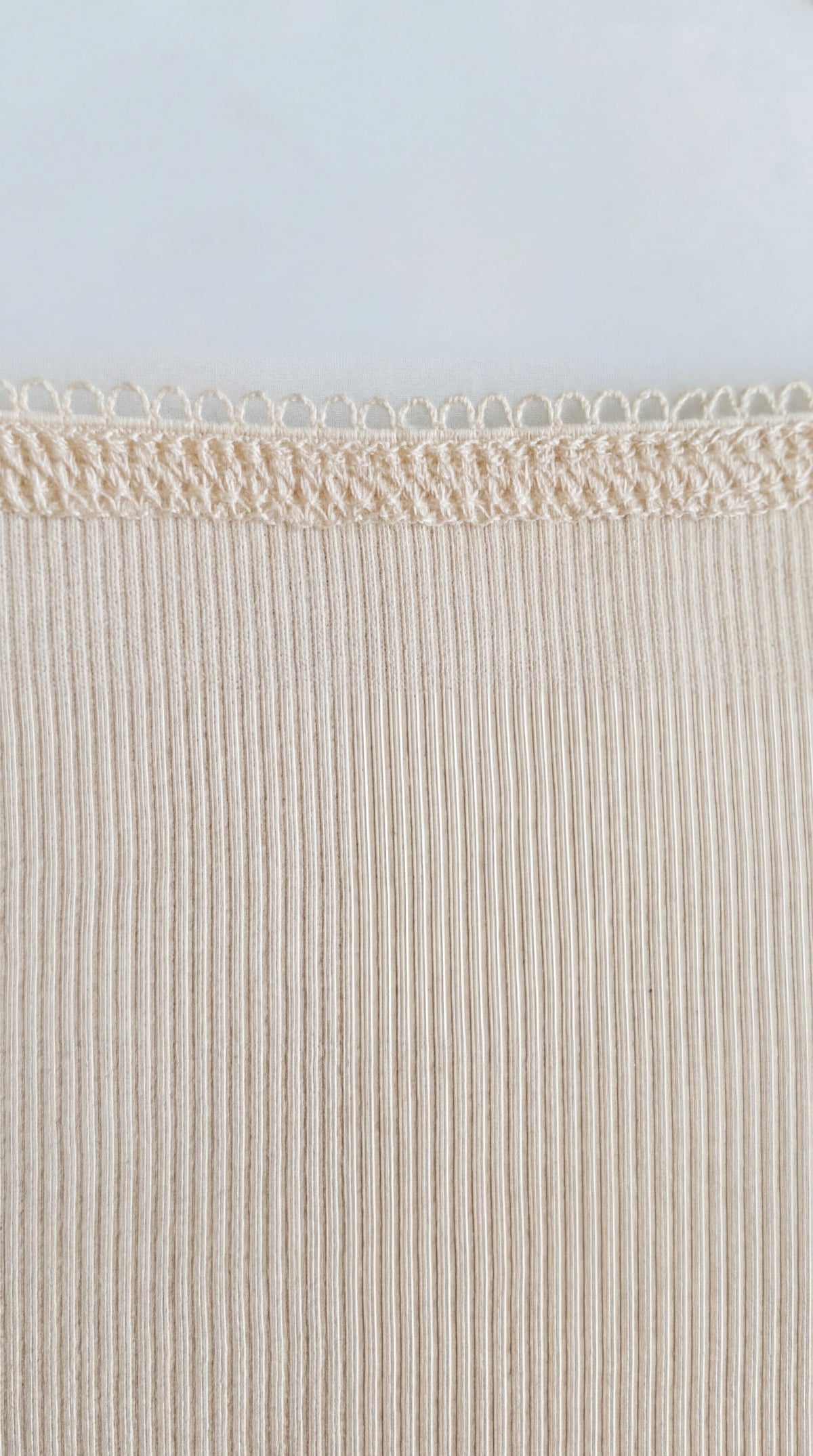
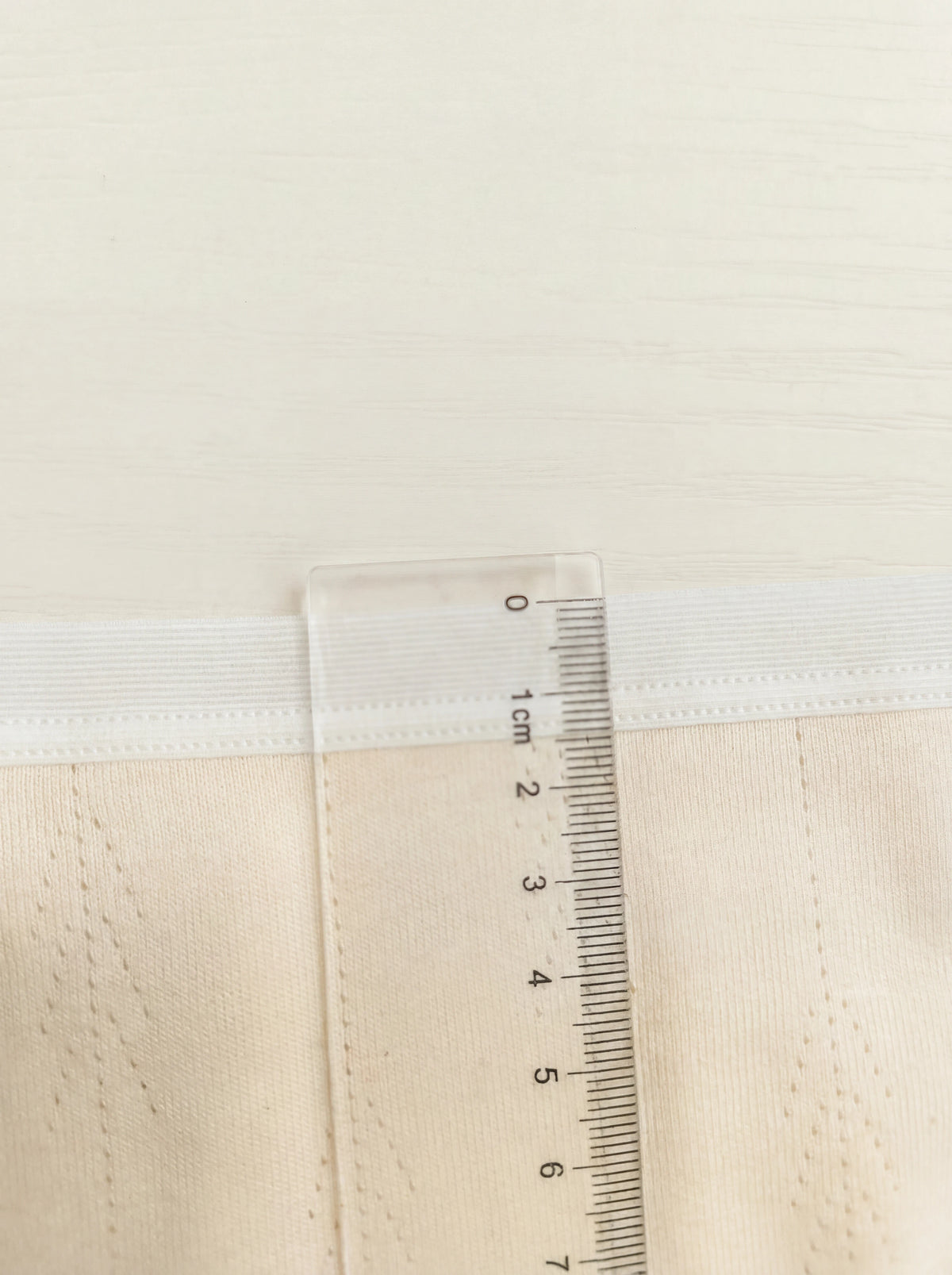
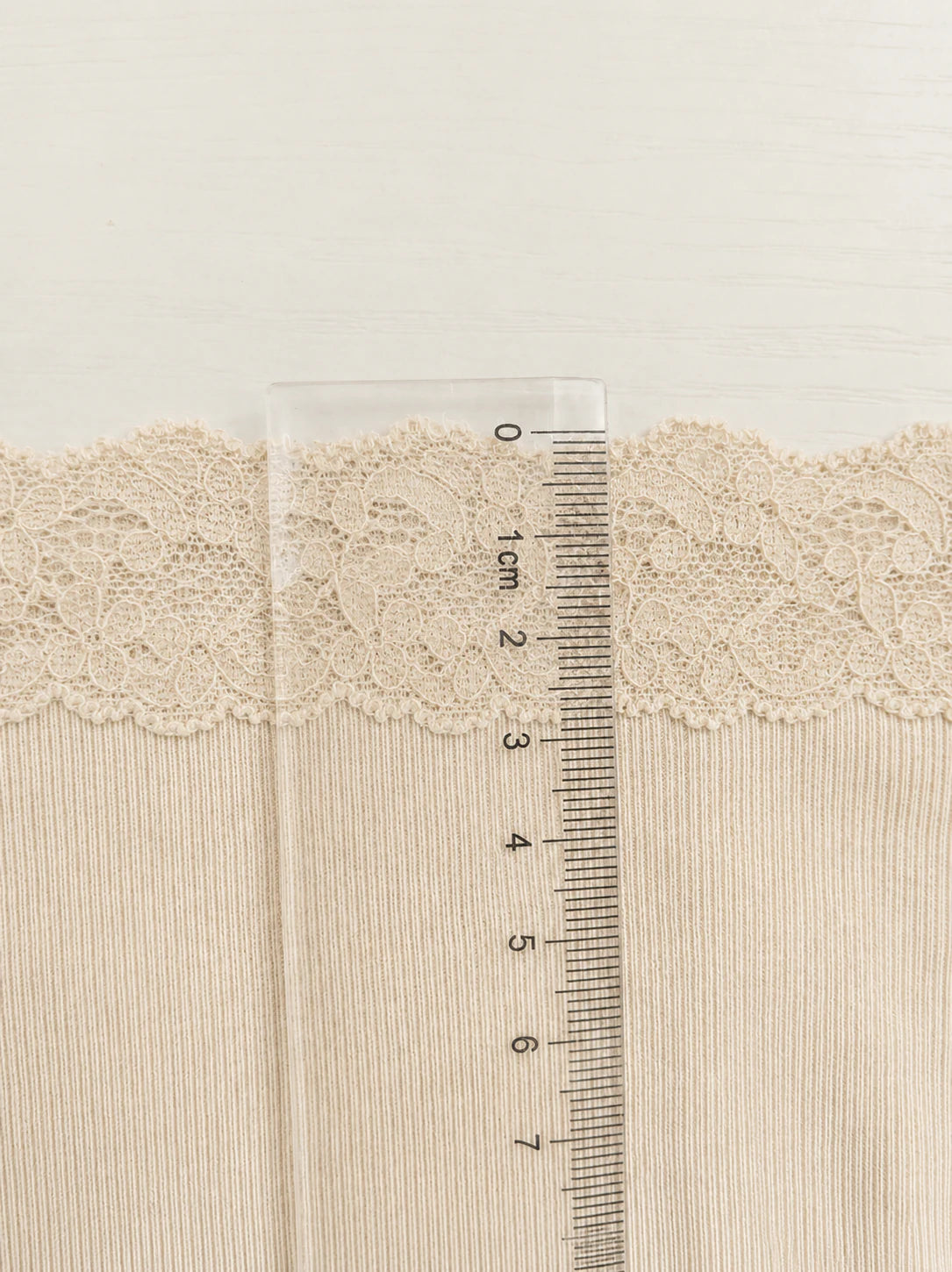
The waistband went through three real development versions before we chose the final construction. Each version solved one problem but revealed another, which is why the final brief uses the elastic lace waistband shown in the third image.
Version 1: Inside seam & picot edge finish waistband. This first waistband had enough stretch, but the area touching the skin had dense stitching. On sensitive skin, especially as the abdomen changes during pregnancy, that stitched surface created too much friction. We removed this version because comfort against the skin mattered more than stretch alone.
Version 2: Enclosed thin waistband. The second version felt much smoother on the surface, but the elastic was too narrow. It did not provide enough stretch and recovery for a growing bump, so it could not give the stable, flexible fit we wanted.
Version 3: Elastic lace waistband. The final version uses an elastic lace with enough width to distribute stretch more gently. The elastic waistband is deliberately stitched to the outside of the brief to reduce skin rubbing. This gave us the best balance: gentle contact and enough elasticity.
The Version 3 waistband was chosen because it solved the real trade-off: soft enough against sensitive skin, wide enough to recover, and open enough to avoid feeling like a tight solid band.
Building the Shape
Coverage was just as important as fabric.
The brief needed enough height through the front to comfortably accommodate a changing abdomen, but it also needed full coverage through the back so that it felt secure in normal movement.
That led us towards a higher rise and a deliberately fuller shape.
We did not want the garment to achieve fit by squeezing the body.
Instead, much of the comfort comes from simply giving the body more physical room.
That distinction became important later.
During pregnancy, the extra room allowed the brief to accommodate a changing abdomen.
Outside pregnancy, it creates a relaxed everyday fit for anyone who prefers fuller coverage and less restriction.
Beyond Pregnancy
This was the part we did not fully appreciate when we started.
The brief was developed because of pregnancy, but my wife did not stop wanting it once pregnancy ended.
She gave birth by C-section and continued wearing the same style during her recovery.
Four months postpartum, she still wears it.
The bump was gone, but the things she liked about the brief were still there:
the cotton against the skin,
the fuller coverage,
the soft waistband,
the generous shape,
and the absence of a tight, compressed feeling.
That is when the product stopped making sense to us as something that belonged only to maternity.
It had become an everyday brief that happened to be particularly well suited to pregnancy.
Who It Is For
We do not think this brief needs to belong to one body type or one stage of life.
It may suit you if you are pregnant.
It may suit you after pregnancy.
It may suit you if you have a fuller body and prefer more room through the abdomen and hips.
It may suit you if your body has changed over the years.
Or you may simply be someone who likes high-rise underwear, full coverage, natural fibres and a softer fit at home.
The design does not ask the body to fit a particular ideal.
It simply gives it more room.
Questions behind the design
Was the brief designed only for pregnancy?
No. It began with the need for a more accommodating brief during pregnancy, but the final product was designed as an everyday full-coverage brief that can also be worn before pregnancy and after birth.
Why we choose undyed material
We wanted the main body fabric to remain simple and clearly described. Using undyed organic cotton means the fabric retains the natural colour of the fibre rather than receiving an added synthetic colour treatment.
This choice does not make the brief a medical or hypoallergenic product, and individual skin responses can vary.
Why use a 1×1 rib knit?
A 1×1 rib knit provides natural stretch through its knitted structure.
At approximately 180 gsm, the fabric was selected to balance breathability, softness and everyday durability without making the brief feel overly lightweight.
What does “100% organic cotton” mean?
The 100% organic cotton claim applies to every part of the brief except the elastic lace waistband, which does not sit directly against the skin.
The cotton fabric itself contains no added synthetic fibres. It is not a 95% cotton, 98% cotton or “cotton-rich” blend commonly found in underwear — the body of the brief is made from 100% organic cotton.
Is undyed cotton the same as untreated cotton?
No. “Undyed” specifically means that colour has not been added to the body fabric.
Cotton still goes through the necessary processes to become yarn and knitted fabric.
Is this brief suitable for sensitive skin?
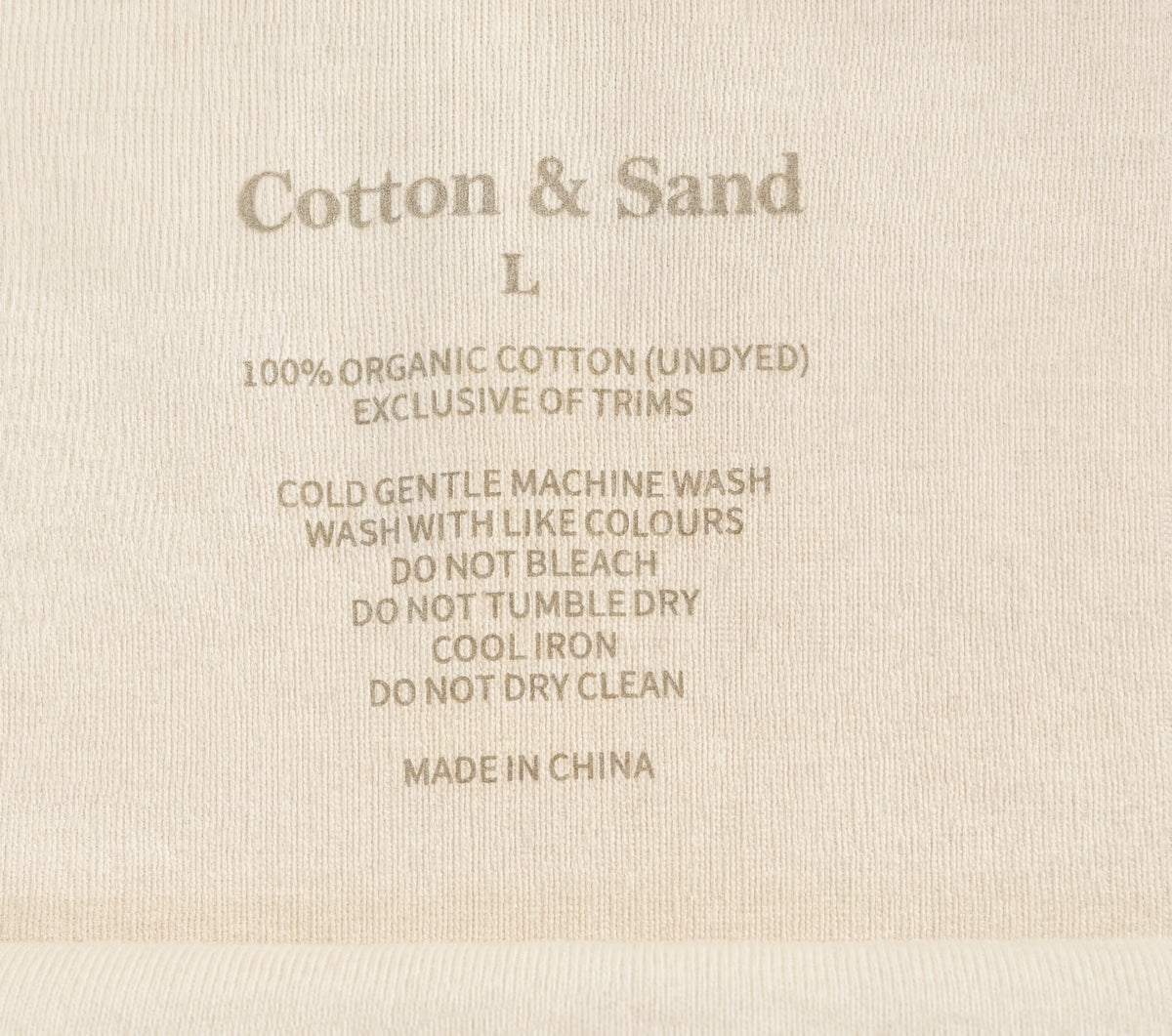
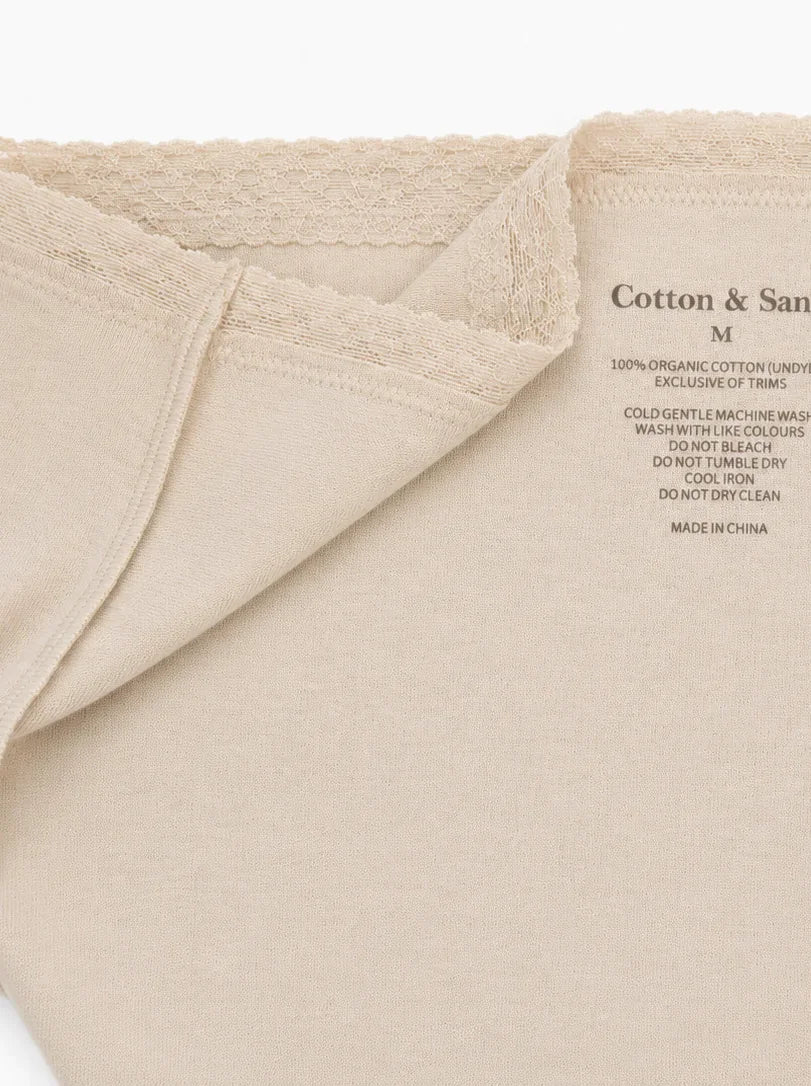
The body fabric is made from undyed organic cotton and the brief uses a heat-transfer printed label instead of a scratchy woven tag.
However, skin sensitivity varies between individuals, and we do not claim that the product is hypoallergenic or suitable for every skin condition.
Stop wearing the product if irritation occurs and seek appropriate professional advice where needed.
Does the brief provide postpartum medical support?
No. It is not compression wear, surgical recovery wear or a medical support garment.
Anyone recovering from birth or surgery should follow the advice of their healthcare professional.
Why can the measurements vary slightly?
The brief is made from a flexible knitted fabric and assembled through sewing processes.
Small differences can occur during cutting, stitching and fabric relaxation, so each measurement has a stated manufacturing tolerance.
What this brief does not claim
- It is not a medical garment.
- It is not designed to diagnose, treat, or prevent any condition.
- It does not replace medical advice after birth, surgery, or skin irritation.
- It is not a compression garment.